
Publish Date: October 5, 2026
IIT Delhi Researchers Demonstrate Quantum Entanglement Alongside Classical Data Over Optical Fiber
Share this on
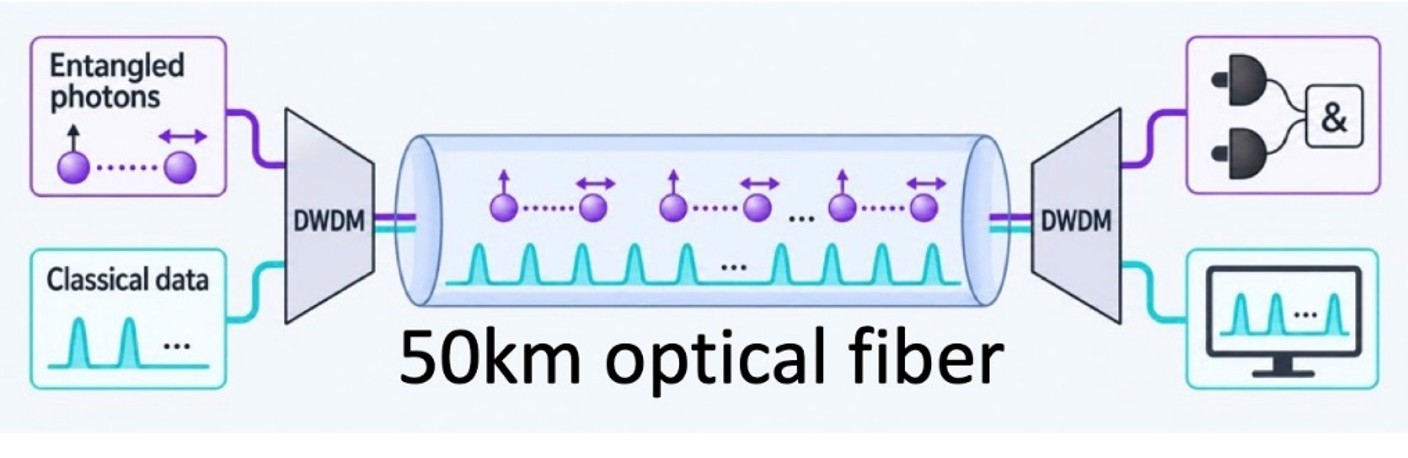
New Delhi: A team of researchers at IIT Delhi have achieved a significant milestone in quantum communication by demonstrating the transmission of quantum-entangled photons alongside classical data over a 50-km optical fibre link.
Led by Prof. Bhaskar Kanseri, Physics Dept., IIT Delhi, the research addresses a major practical challenge in the development of future quantum communication networks: how to transmit fragile quantum signals through the same fibre-optic infrastructure that carries high-power conventional telecommunications signals.
Quantum entanglement is a fundamental phenomenon underpinning several emerging quantum technologies, including quantum key distribution (QKD), which offers new approaches to securing the exchange of sensitive information. However, integrating quantum signals with existing telecommunications infrastructure is technically challenging. Classical optical signals are typically much stronger than quantum signals and can generate noise that may disturb or obscure delicate quantum states.
The IIT Delhi demonstration shows that quantum and classical communications can coexist over the same optical-fibre infrastructure under carefully controlled conditions. This represents an important step towards the practical integration of quantum technologies with existing telecommunications networks in an optimal way.
The potential long-term applications of this achievement are significant. More mature quantum communication networks could contribute to enhanced security for sensitive communications involving financial institutions, government agencies, healthcare organisations and critical infrastructure. By making use of same fibre infrastructure for quantum and classical signal, such networks could also become more scalable and cost-effective to deploy.
For India, the achievement adds to the country's growing capabilities in quantum technologies and supports broader efforts to develop secure, next-generation communication systems. This is an internationally competitive demonstration, representing a significant Indian contribution and a large step towards developing practical quantum networks. (More details can be found here: https://doi.org/10.1016/j.optcom.2026.133728)
Under the guidance of Prof. Kanseri, his PhD students Nishant Kumar Pathak and Abhay Singh Dulta also played a key role in this research work, which received funding through IIT Delhi's Institute of Eminence (IoE) grant and the National Quantum Mission (NQM) of the Department of Science and Technology (DST), Government of India.
Other News
स्ट्रोक के बाद बोलने की समस्या के उपचार के लिए आई.आई.टी. दिल्ली, एम्स नई दिल्ली और आई.एच.बी.ए.एस. ने विकसित किया मेलोडिक इंटोनेशन थेरेपी (एम.आई.टी.) का पहला हिंदी संस्करण।
Read More
IIT Delhi, AIIMS New Delhi and IHBAS Develop First Hindi Version of Melodic Intonation Therapy (MIT) for Post-stroke Aphasia
Read More
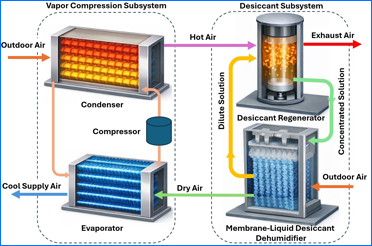
IIT Delhi Researchers Developing a High-Efficiency AC Capable of Reducing Electricity Use by a Third | आई.आई.टी. दिल्ली के शोधार्थी कर रहे हैं बिजली-बचत वाला स्मार्ट एयर कंडीशनर विकसित
Read More
Researchers Develop a Hybrid Physics-AI Framework for National-Scale River Flow Modeling | राष्ट्रीय स्तर पर नदी प्रवाह मॉडलिंग के लिए शोधकर्ताओं ने विकसित किया हाइब्रिड फिजिक्स–AI फ्रेमवर्क
Read More
आई.आई.टी. दिल्ली के शोधकर्ताओं द्वारा मानव वैज्ञानिकों की तरह वास्तविक वैज्ञानिक प्रयोग कर सकने वाले कृत्रिम एजेंट 'AILA' का निर्माण | IIT Delhi Researchers Create AI-Agent ‘AILA’ That Can Conduct Real Scientific Experiments Like Human Scientists
Read More
आई.आई.टी. दिल्ली और एम्स के शोधकर्ताओं ने किया एक निगलने योग्य सूक्ष्म उपकरण विकसित | IIT Delhi and AIIMS Researchers Develop a Swallowable Microdevice That Can Collect Microbial Samples from the Small Intestine
Read More
आईआईटी दिल्ली अध्ययन: एंड्रॉइड ऐप्स से निजी जानकारी उजागर होने का खतरा | Mobile Apps on Android Devices Requiring Precise Location Permissions Can Reveal a Significant Amount of Private Information About Users: Shows IIT Delhi Study
Read More
स्वच्छ इनडोर हवा के लिए आईआईटी दिल्ली का स्मार्ट एचवीएसी समाधान | IIT Delhi Researcher-led Team Develops Machine Learning Framework to Design Smarter HVAC Filters to Ensure Healthier Indoor Air Quality
Read More
आई.आई.टी. दिल्ली के शोधार्थियों ने सीमेंट की त्वरित गुणवत्ता जांच के लिए किया एआई मॉडल विकसित | IIT Delhi Researchers Develop AI Models for Instantaneous Quality Check of Cement
Read More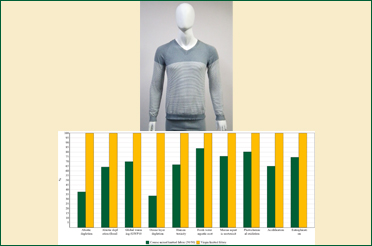
आई.आई.टी. दिल्ली के शोधार्थियों ने डेनिम अपशिष्ट को उच्च गुणवत्ता बनाए रखते हुए बुने हुए कपड़ों में पुनर्चक्रण की विधि की विकसित | IIT Delhi Researchers Develop Method to Recycle Denim Waste to Knitted Garments Without Compromising Quality
Read More
आई.आई.टी. दिल्ली के शोधकर्ताओं ने किया मच्छर रोधी डिटर्जेंट विकसित | Researchers at IIT Delhi developed Mosquito-repellent Detergents
Read More
Artificial Intelligence Transforming Meteorological Prediction Through Innovative Approaches, IIT Delhi Study Shows
Read More
Breakthrough at IIT Delhi: A Multifunctional Optoelectronic Computing Device (MOD-PC) for Next-Gen Neuromorphic Hardware
Read More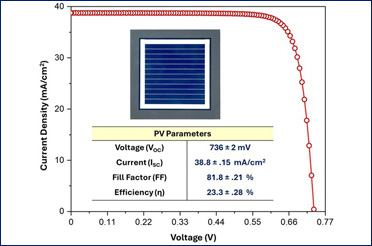
IIT Delhi Researchers Develop High-Efficiency Silicon Heterojunction (SHJ) Solar Cells with Power Conversion Efficiency of >23%
Read More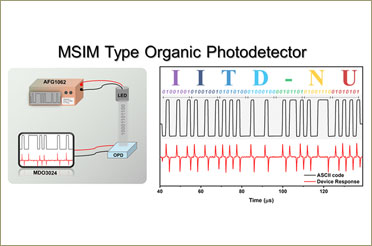
IIT Delhi Researchers Develop High-Speed, Self-Powered Photodetector for Next-Gen Optical Communication
Read More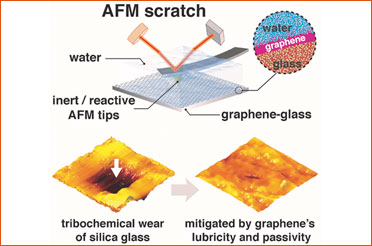
Atomically thin graphene coating effectively protects glasses from simultaneous mechanical and chemical damage under water: Study
Read More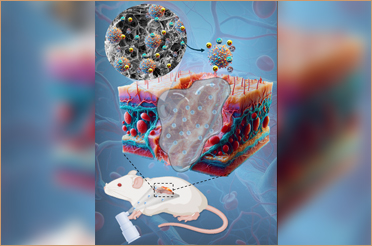
Sprayable Hydrogel by IIT Delhi Researchers for Improving Wound Healing Exhibits Promising Results in Pre-Clinical Trial
Read More